
Last updated November 2, 2026
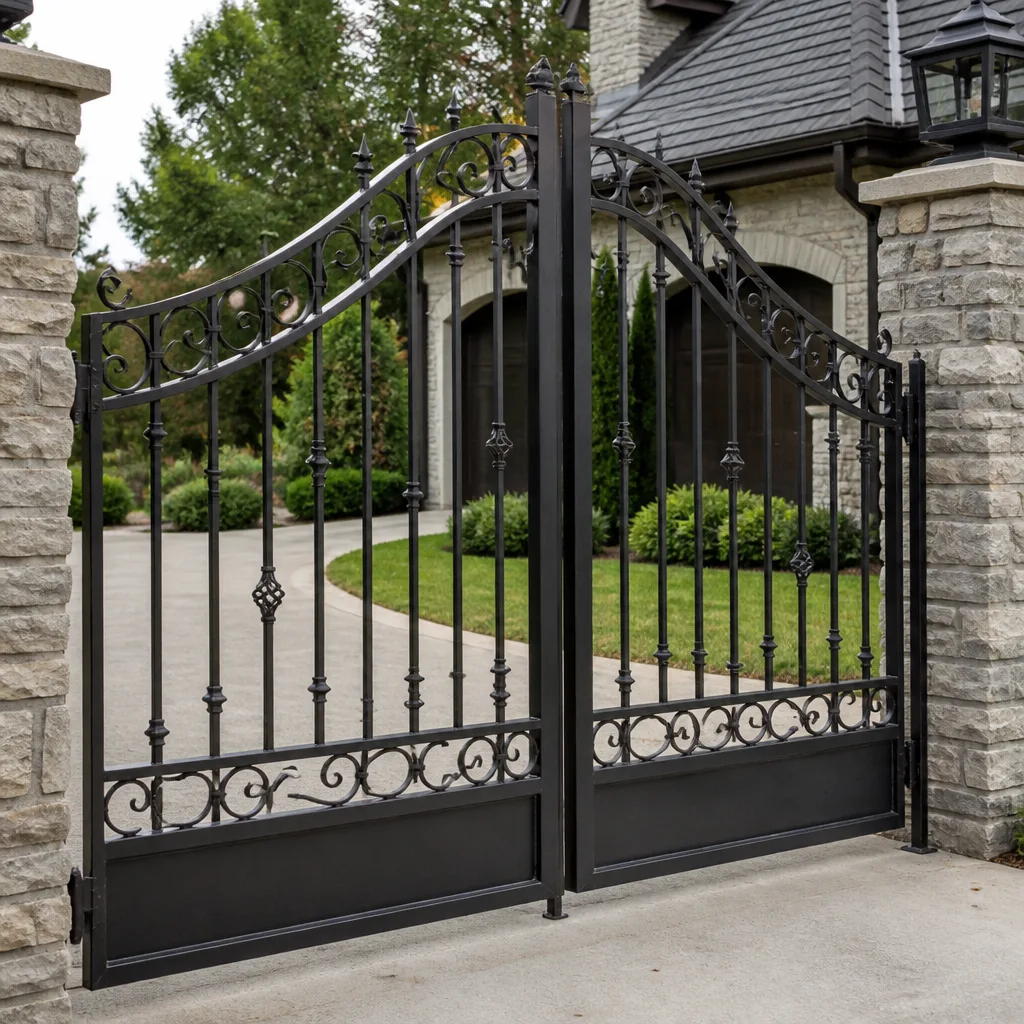 Wrought iron
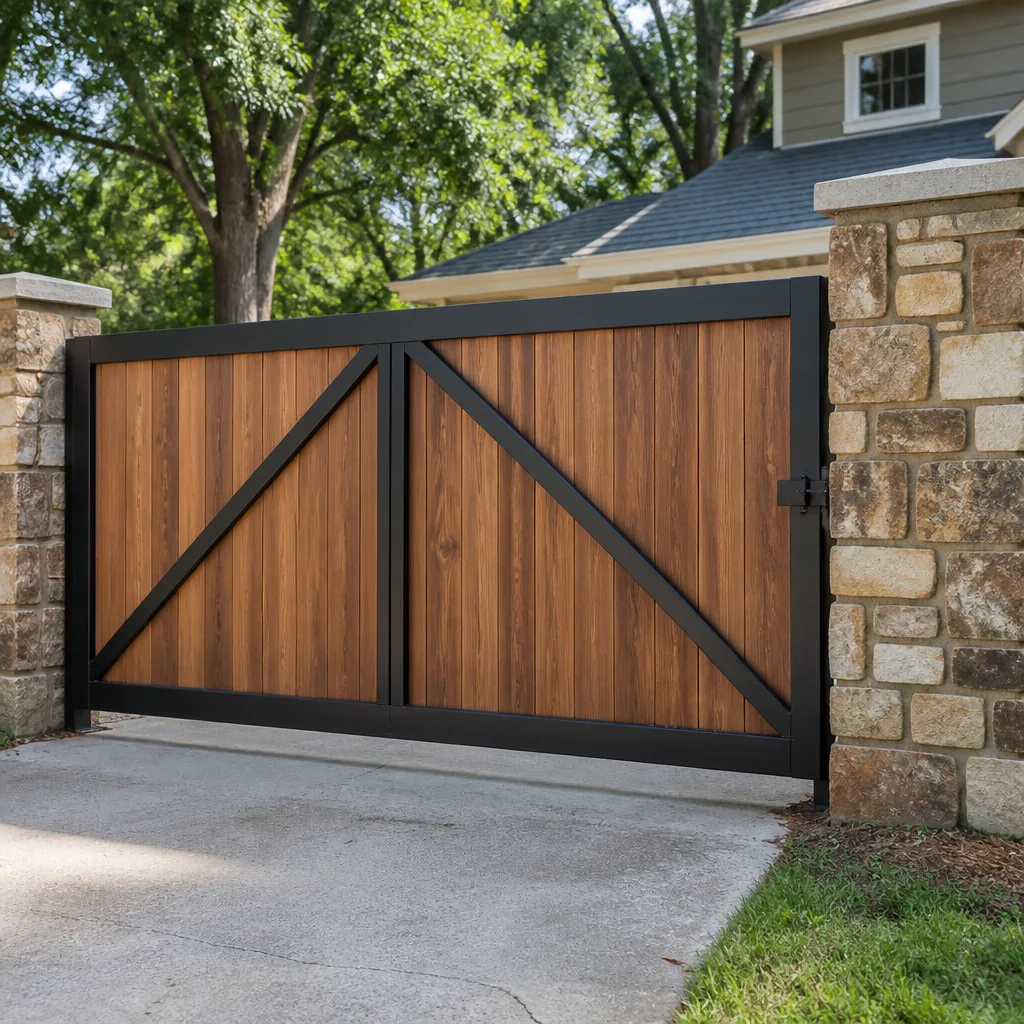 Wood & steel frame
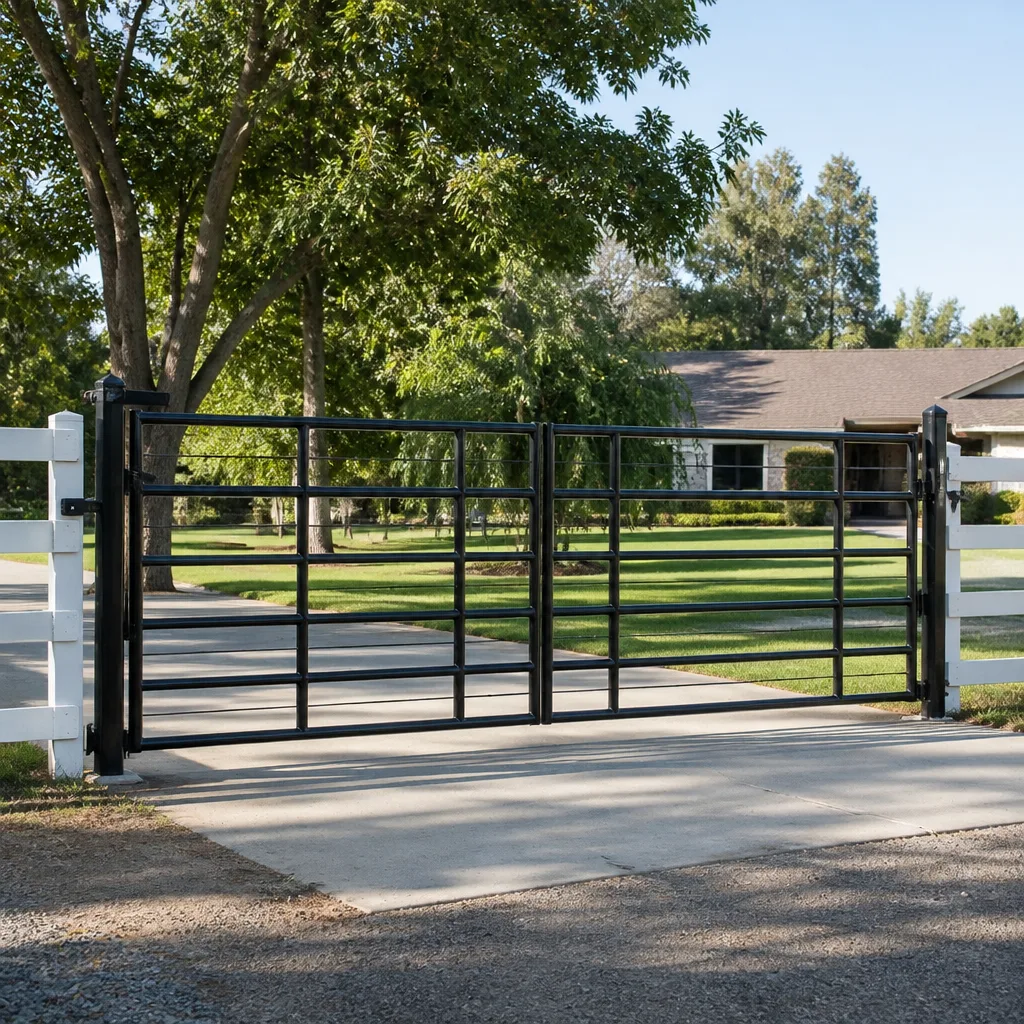 Farm & ranch
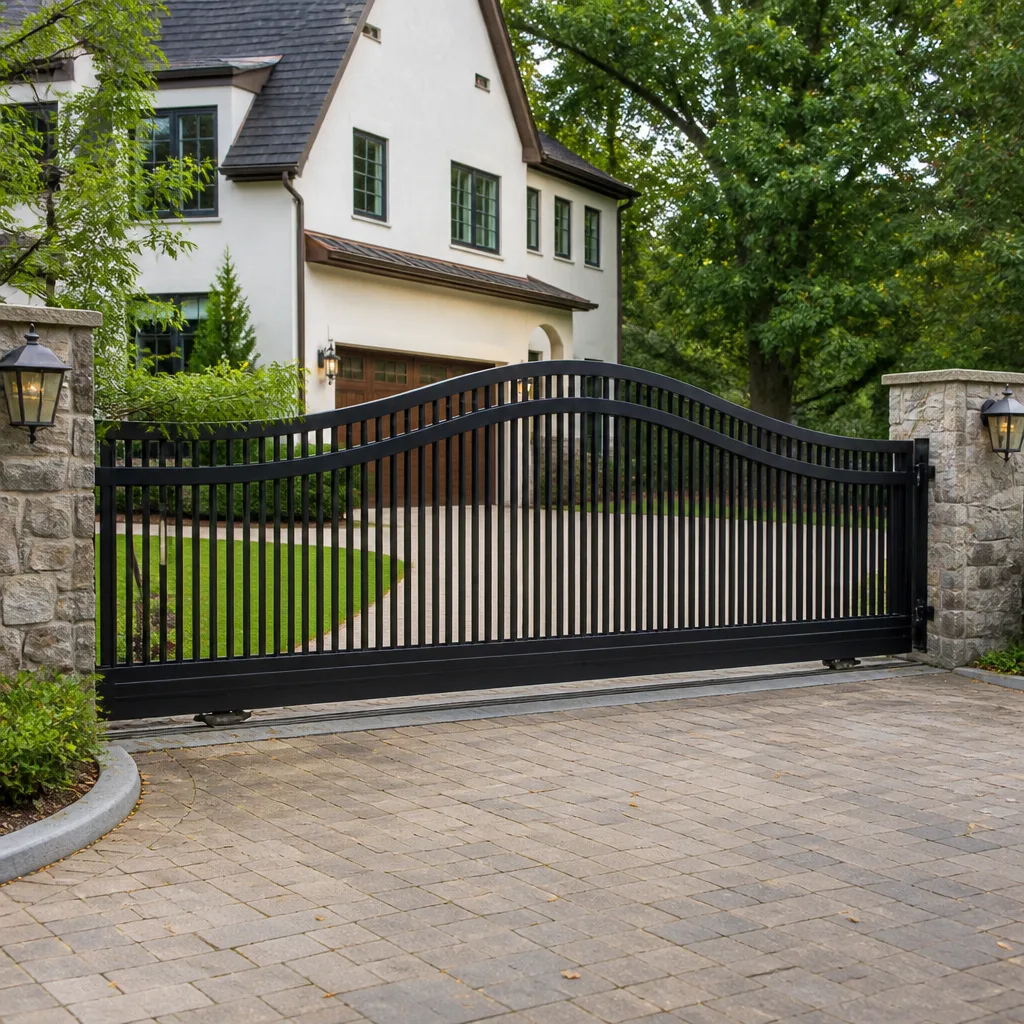 Sliding driveway gates
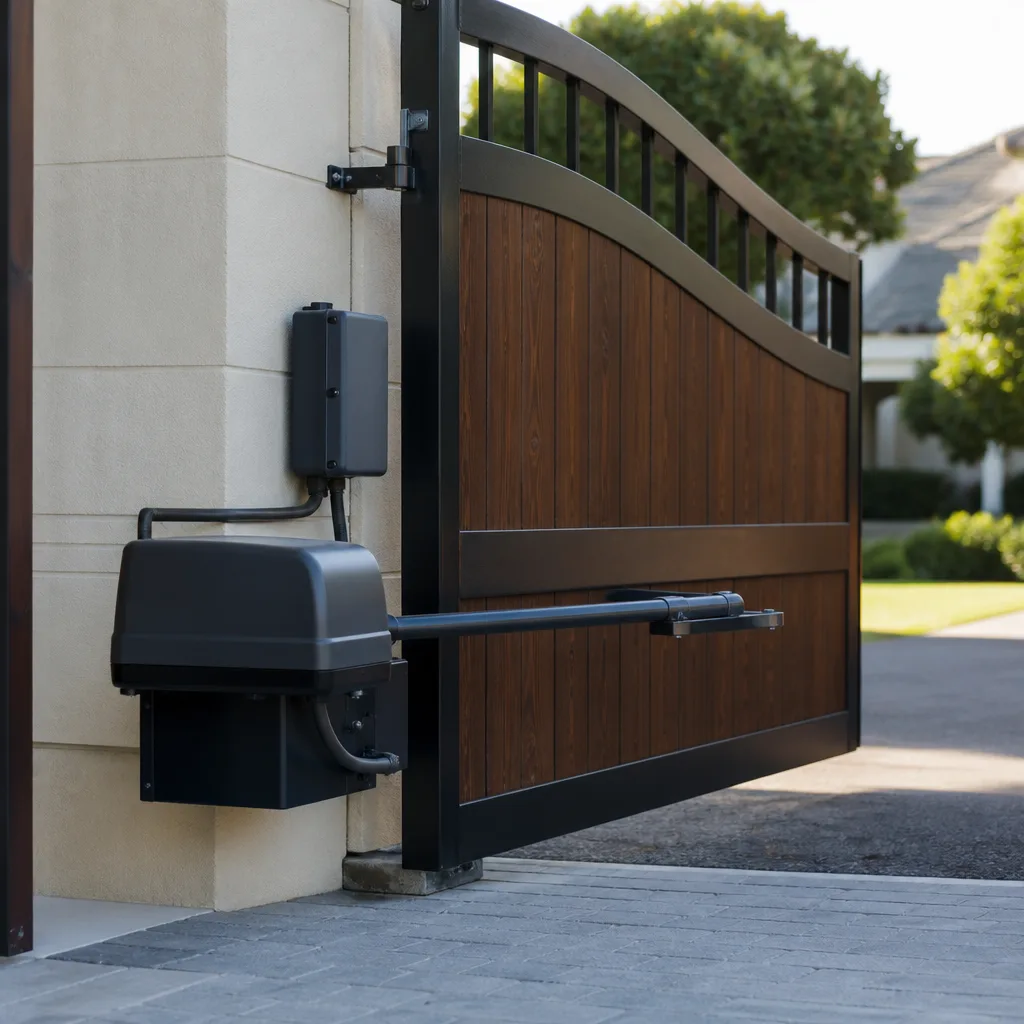 LiftMaster operators
Free on-site gate assessment - hinges, posts, and your LiftMaster or Nice gate operator checked before anything is quoted
The assessment is free and the quote is the invoice.
Get your free estimateHow to Hire a Gate Repair Contractor in San Marcos: A Step-by-Step Guide
Ask any contractor you’re considering one question before you invite them onto your property: “Which operator brands do you carry parts for in your van right now?” The answer, or the silence after it, tells you more than any stack of online reviews. In San Marcos, where roughly 40 percent of single-family homes in newer developments like Santa Fe Hills and Old Creek Ranch have automated driveway gates, a wrong hire doesn’t just cost money. It voids manufacturer warranties, leaves slide gates jerking on worn rollers, and can turn a security asset into a liability. This guide – along with our more guides & resources – gives you the verification steps, the questions that matter, and the quote-reading skills to separate a true gate specialist from a general contractor treating your gate as overflow work.
Styles & brands we work with
- Wrought iron
- Wood & steel frame
- Farm & ranch
- Sliding driveway gates
- LiftMaster operators
Quick Answer
To hire a gate repair contractor in San Marcos, verify California licensing for gate operator work, confirm brand-level experience with your specific system (LiftMaster, FAAC, BFT, Viking, and others), demand a written estimate with line-item parts and labor, and ask who handles the manufacturer warranty on installed components. A dedicated gate specialist with single-trade focus will diagnose the component that failed rather than quote a system replacement by default.
Table of Contents
- Why a Gate Specialist Beats a General Contractor
- License and Insurance Verification in California
- Five Questions to Ask Before Scheduling an Estimate
- How to Read a Gate Repair Quote in San Marcos
- Red Flags in Contractor Communication
- A Step-by-Step Hiring Process
- Common Mistakes to Avoid
- When to Call a Professional
- Frequently Asked Questions
- The Bottom Line
Why a Gate Specialist Beats a General Contractor
The gate on your San Marcos driveway is not a fence. That sounds obvious until you discover that many companies in the region list “gate repair” on their service menu alongside fencing, garage doors, railing, and decking. These are different trades. A fence contractor understands posts, rails, and pickets. A gate specialist understands motors, control boards, loop detectors, safety sensors, gearboxes, and the dozens of failure modes in between. When you call a fence company for an electric gate that won’t open, you’re likely to get a fence technician who’s seen ten operators in his career, not ten this month.
In our experience, the most expensive repair is the one that follows a misdiagnosis. A gate that drags on its track might be a worn roller, which is a $50 part and 40 minutes of labor. Or it might be a failing gearbox that’s been binding for months, and the roller wear is just a symptom. A specialist catches that difference on the first visit. A generalist replaces the roller, bills you, and leaves. Three weeks later the gate fails again, but now the operator has cooked itself trying to move a load it was never meant to move, and you’re looking at a $1,200 replacement instead of a $300 repair. That’s not a hypothetical. We’ve seen it repeatedly in the San Marcos market.
Electric gate repair in San Marcos demands diagnostic depth. A technician who works exclusively on gates has seen your brand’s failure patterns before. Linear operators tend to have photo-eye alignment issues after storms. BFT boards show specific capacitor failures. Ghost Controls systems get finicky with low-voltage runs over 150 feet. If the person on your property can’t name the failed component before they quote the repair, you’re paying for guesswork.
Here’s the practical distinction. A gate specialist:
- Stocks common parts for operators on the van, not in a warehouse two weeks away
- Carries gear for both residential and commercial operators, from a Mighty Mule on a farm gate to a Viking swing arm at a gated community in San Elijo Hills
- Can diagnose mechanical failures (hinges, wheels, chains) and electrical failures (boards, motors, sensors) in the same visit
- Loads, sets, and tests safety features, which is not optional on automated gates
The quality of a repair starts with the quality of the diagnosis. Single-trade focus is not a marketing phrase. It’s the difference between replacing a component and guessing at a system.
License and Insurance Verification in California
California does not have a separate license specifically for “gate repair.” This creates confusion that dishonest contractors exploit. Gate work falls under broader CSLB classifications, and knowing which one applies to your project is the first line of defense.
For automated gate operator installation and repair, you want a contractor holding a C-10 Electrical license or a C-61 Limited Specialty license with the D-28 Door, Gate, and Activating Devices classification. The C-10 covers the electrical components: wiring, control boards, photo eyes, and motor connections. If the job involves moving an operator, adding a keypad, or running new low-voltage wire, this is the license that applies. A C-61/D-28 classification covers gate hardware more broadly. A general building contractor, a Class B, can legally take on gate installation as part of a larger project, but not as a standalone automation job if it requires disconnecting and reconnecting electrical components.
Why does this matter to a homeowner in San Marcos? Because a contractor who tells you “gates don’t need a license” is wrong, and a contractor who sends a handyman without any license is exposing you to liability. If an unlicensed worker gets injured on your property, you’re the one paying the medical bills and the lawsuit. If a poorly wired operator causes a fire or a gate falls on someone, your homeowners insurance may deny the claim entirely.
Verification steps before you book:
- Ask for the license number. Get it in writing, not over the phone.
- Run it on the CSLB website (cslb.ca.gov). The search is free and takes 30 seconds. Confirm the classification, not just that a number exists.
- Check the license is active, not suspended or expired. CSLB lists status and any disciplinary actions.
- Request proof of general liability insurance. The standard minimum is $1 million. Contractors working on community gates or commercial properties often carry $2 million.
- Ask about workers compensation insurance. A solo operator with no employees may have an exemption, but if anyone besides the owner is on your property, workers comp is non-negotiable.
San Marcos sits in a region where wind events are a real factor. Gates in older neighborhoods on the hills near Palomar College get battered by Santa Ana winds, and storm damage repair calls spike every fall. A contractor without insurance who damages your property during a wind-related repair is a contractor without recourse. Don’t hire one.
Five Questions to Ask Before Scheduling an Estimate
You don’t need a technical background to vet a gate contractor. You need a short list of questions and the discipline to ask all of them before the technician even arrives. The answers, or the evasions, will tell you what you need to know.
- “Which operator brands do you carry parts for in your van right now?” The hook question from the top of this guide is the single best filter. A gate specialist runs parts for LiftMaster, FAAC, BFT, Linear, Viking, Ghost Controls, DoorKing, Elite, and Mighty Mule. If the answer is “we can order anything,” that means “we stock nothing,” which means your simple repair is now a two-visit job with a parts shipping window.
- “Can you name the component that commonly fails on my specific operator before you arrive?” This is not a trap question. It’s a competence check. If you have a Viking operator, a specialist can tell you the most frequent failure points by model line before stepping inside the cabinet. A generalist says “well, I’d have to look at it.” Both may be technically true, but the specialist has already narrowed the diagnostic tree.
- “Who provides the labor warranty on your repair?” Many operators come with a manufacturer parts warranty, but the labor is only covered by the contractor. If a part fails 60 days after installation, who pays for the second service call and the reinstallation labor? Get the answer in writing. Vague answers like “we stand behind our work” are not warranties.
- “How do you source parts for a system that’s more than 10 years old?” Gate operators are not like cars. You can get a Buick part for a 1985 model. Try finding a control board for a Viking operator from 2004, and you’ll discover a secondary market of refurbished, cross-referenced, and discontinued components. A specialist knows the channels. A generalist will tell you the system is “too old” and quote a full replacement.
- “Will the person doing the work be the same person who quotes it?” Salesman-driven companies send a polished estimator who photographs the gate and leaves. Then a different crew arrives with a different understanding of the job. That’s how surprise change orders happen. A smaller specialist shop sends the technician. The quote comes from the person who will turn the wrench, which means the quote reflects reality.
In San Marcos, a city where HOAs are common and gate aesthetics matter, you might not have final say on hardware choices. If you’re in a community like Stone Canyon or Rancho Dorado, your HOA may have approved vendor lists and finish requirements. A local contractor offering our Gate Repair services and who works regularly in these neighborhoods already knows the rules. A contractor from outside the area may not, and that’s another reason to hire a San Marcos company.
How to Read a Gate Repair Quote in San Marcos
Gate repair quotes vary wildly, and the variance is not always about quality. Some companies quote low and add change orders. Others quote high and over-spec parts that aren’t needed. Learning to read a quote line by line is the skill that saves you thousands.
San Marcos market rates for common gate repairs, as a realistic range:
| Repair Type | Typical Range | What Drives Cost |
|---|---|---|
| Hinge replacement (set) | $250 – $600 | Gate weight, steel vs. iron, welding needs |
| Roller or wheel replacement | $120 – $350 | Access, track condition |
| Control board replacement | $350 – $800 | Brand; BFT, Viking, and LiftMaster boards differ |
| Operator motor replacement | $700 – $1,800 | Linear, Ghost Controls, Mighty Mule vs. commercial Viking or DoorKing |
| Photo eye or safety sensor repair | $150 – $400 | Alignment, wiring, replacement parts |
| Loop detector replacement | $300 – $650 | Cutting, sealing, sensitivity tuning |
A legitimate quote has specific line items. It says “BFT SCA-1 control board, part #, $X” not “electrical system repair, $X.” It separates parts from labor. It shows a diagnostic fee and states whether that fee is credited toward the repair. It includes a completion date or timeframe. Anything with a single lump sum and a line like “gate repair as discussed” is a red flag. You cannot sign a contract that doesn’t specify what you’re buying.
The lowest bid is not the best deal. A low bidder often:
- Leaves off the safety system recalibration, which leaves your gate out of code
- Uses off-brand replacement parts that fail in 18 months
- Skips the concrete pad reinforcement under a new operator
- Doesn’t include the labor to reset travel limits, so your gate slams open instead of decelerating
The middle bid with specific parts and a labor warranty is usually the right call. And the high bid? Sometimes it’s legitimately a better operator or a heavy-duty hinge solution. But high price is not, by itself, a quality signal. You’re looking for specificity, not spending.
Before any work starts, you should have a price in writing. The quoted price is the agreed price, and changes require a written change order with a new signature. If a contractor balks at that, you have your answer about who runs the job.
Red Flags in Contractor Communication
How a contractor communicates before the job is how they’ll communicate during the job. Certain patterns show up over and over in San Marcos gate repair calls, as detailed in Seasonal Gate Repair Care for San Marcos: Year-Round Homeowner’s Guide, and each one is a reason to get a second opinion.
- Inability to name the failed component. If the technician says “your board is shot” but can’t tell you which board, which function failed, or how they confirmed it, you’re not talking to a diagnostician. You’re talking to a parts swapper.
- Upselling a full operator replacement when a part would restore function. Control boards fail independently of motors. Photo eyes get knocked out of alignment. Gearboxes are serviceable. A contractor who jumps straight to “you need a new operator” on a 7-year-old LiftMaster is either lazy or dishonest. Sometimes replacement is genuinely the right call, but the explanation must be specific: model discontinued, parts unavailable, internal gear damage confirmed.
- No written estimate, or an estimate that’s a text message with a number. A real quote has your name, your address, a description of the problem, the proposed repair, specific parts, labor hours, total cost, and warranty terms. If you got a photo of a notepad and a voice memo, you got nothing.
- Pressure to sign immediately. “I’m already in the area, I can do it today for cash, no tax.” That’s not a deal. That’s an unlicensed operator avoiding a paper trail. Any legitimate company gives you time to review a written quote.
- Vagueness about licensing and insurance. The words “fully licensed, bonded, and insured” on a website mean nothing until you verify the number. A contractor who is evasive when you ask for a CSLB number has just disqualified themselves.
- Refusal to provide references for similar manual gate work. Every contractor has done some kind of hinge repair. But have they rebuilt a 16-foot steel slide gate with a warped track? Have they serviced a Linear operator at a small apartment off Nordahl Road? If they can’t point to similar projects, your gate is their training exercise.
A Step-by-Step Hiring Process
If you want the short version of this guide, here it is. This is the sequence we’d recommend to anyone hiring gate work in San Marcos.
- Identify the problem type. Is it mechanical (physical gate won’t move freely, hinges sagging, wheels off track) or electrical (motor runs but gate doesn’t move, gate doesn’t respond, opens but won’t close)? Knowing the category helps you ask the right questions.
- Get two or three estimates. Not five. Gate work is specialized, and San Marcos doesn’t have 50 qualified gate contractors. Two or three specialists will give you a realistic range.
- Verify licensing and insurance for each. CSLB check, insurance certificate request, and a quick look at the license history for disciplinary actions.
- Ask the five questions from the section above. Do this on the phone before the visit, not after. You’ll eliminate at least one bidder from the pool.
- Request a written quote with specific parts and labor breakdown. No part numbers, no job. If the quote says “operator repair” without naming the operator model, send it back with a request for specificity.
- Check the warranty in writing. Ask specifically: what happens if the same part fails in 30 days, 90 days, or a year?
- Confirm the schedule and the change-order process. When will the work happen, and what happens if the job grows? Written change orders protect both of you.
- Walk the finished job. Test the gate, both fully open and fully closed. Test the safety sensors. Watch for jerky movement, unusual noise, or a gate that doesn’t stop when the sensor is blocked.
One note on gate safety: automated gates that are out of adjustment can be dangerous. If your gate slams instead of decelerating, or if the reverse function doesn’t trigger when the gate meets resistance, do not operate it. Call a professional who can relevel the travel limits and test the full safety system. This is not a DIY fix.
Common Mistakes to Avoid
- Hiring based on price alone. The cheapest gate quote in San Marcos is usually cheap for a reason: wrong parts, no safety recalibration, or a tech who’s bidding low because he’s learning on your gate.
- Treating an electric gate like a mechanical gate. A gate that opens but won’t close is an electrical problem. Replacing hinges won’t fix a bad photo eye. Understand the difference before you pay for it.
- Not checking the HOA rules. If your San Marcos community has gate standards, a contractor who installs a non-compliant finish or style just created a $2,000 problem for you. Verify before you sign.
- Ignoring the warranty on the original operator. Some operators carry 5-year or lifetime motor warranties. If you let an unqualified contractor work on the system, you void that warranty. Check the terms before authorizing any work.
- Skipping the safety system check. A gate repair is not done until the reverse mechanism, photo eyes, and force settings have been tested. Failing to verify this is how fingers get crushed and dogs get hit.
- Choosing a contractor who’s “done a few gates.” Gate work is not a side project. If their primary trade is fencing or general construction, insist on a specialist for the operator work, even if it means splitting the job.
When to Call a Professional
Some gate issues are visible and obvious: a sagging hinge, a wheel that’s jumped the track, a gate that scrapes the ground. Others are less visible and more dangerous: an operator that hums but doesn’t move, a control board that clicks without responding, or a safety sensor that fails intermittently. If your gate makes a new sound, if it moves slower than it did a month ago, or if it doesn’t stop when it meets resistance, call a professional before a minor failure becomes a major one. Automated gate operators use motors, springs, and mechanical arms under tension, and a failed component under load can cause injury. Gate Repair San Marcos offers free estimates in San Marcos. Call (877) 798-8589 and we’ll diagnose your gate, identify the specific failed component, and give you a written price before any work begins. Gate installation in San Marcos is also available if your system is beyond repair.
Frequently Asked Questions
Visit the Contractors State License Board website at cslb.ca.gov and enter the license number provided by the contractor. Confirm the license is active, check the classification (C-10 electrical or C-61/D-28 gate specialization) matches the work you need, and review any disciplinary history listed on the record. A number on a business card is not verification; check it directly.
A gate repair estimate should include a specific diagnosis (the failed component or system), individual line items for parts and labor, the manufacturer and model of any replacement components, a labor warranty in writing, and a total price that will not change without a signed change order. See also Choosing the Right Gate Repair Brand: A Buyer’s Guide for San Marcos. Vague language like “gate service” or “system repair” is a red flag. Call (877) 798-8589 for a free, specific written estimate.
Not necessarily, and when you factor in correct diagnosis and parts that last, the specialist is usually the cheaper option over two years. A generalist may quote a lower hourly rate but will often replace parts unnecessarily or misdiagnose the problem, leading to a second call within weeks. You pay the same or more, and you lose the gate for longer.
Yes. Gate Repair San Marcos services systems from LiftMaster, FAAC, BFT, Linear, Viking, Ghost Controls, DoorKing, Elite, and Mighty Mule. The team carries parts for multiple brands on the truck, which means your existing operator doesn’t need replacement just because a component failed.
A gate specialist repairs gates exclusively and works on automated operators, control boards, sensors, and wiring every day. A fence company may offer gate repair as a secondary service, but the technician may have limited experience with electric gate systems. That difference in reps matters when the failure is in the operator, not the fence post.
Repair is usually the right answer if the structure is sound, the metal or wood is in good condition, and the operator failure is isolated to a replaceable component. Full replacement makes sense when the gate frame is rusted, the hinges have torn out, or the operator is discontinued with no parts availability. A professional diagnosis will tell you which path applies to your specific gate. Call (877) 798-8589 to schedule a free evaluation in San Marcos.
The Bottom Line
Hiring a gate repair contractor in San Marcos is not the same as hiring a handyman. The gate in your driveway is a mechanical system with electrical components, safety features, and manufacturer warranties that go up in smoke when the wrong person touches them. The right contractor has brand-specific experience, verifiable licensing, a written estimate with specific parts, and a labor warranty in writing. The wrong contractor has a low price and a vague description of the work. Ask the brand-stock question first. It will save you more than any review. For a complete guide to Gate Repair San Marcos home services or details on Gate Repair in San Marcos, explore our full range of manual, electric, and installation services. We specialize exclusively in gates. It’s all we do.
Written by the team at Gate Repair San Marcos, serving San Marcos since 2011.
See the difference
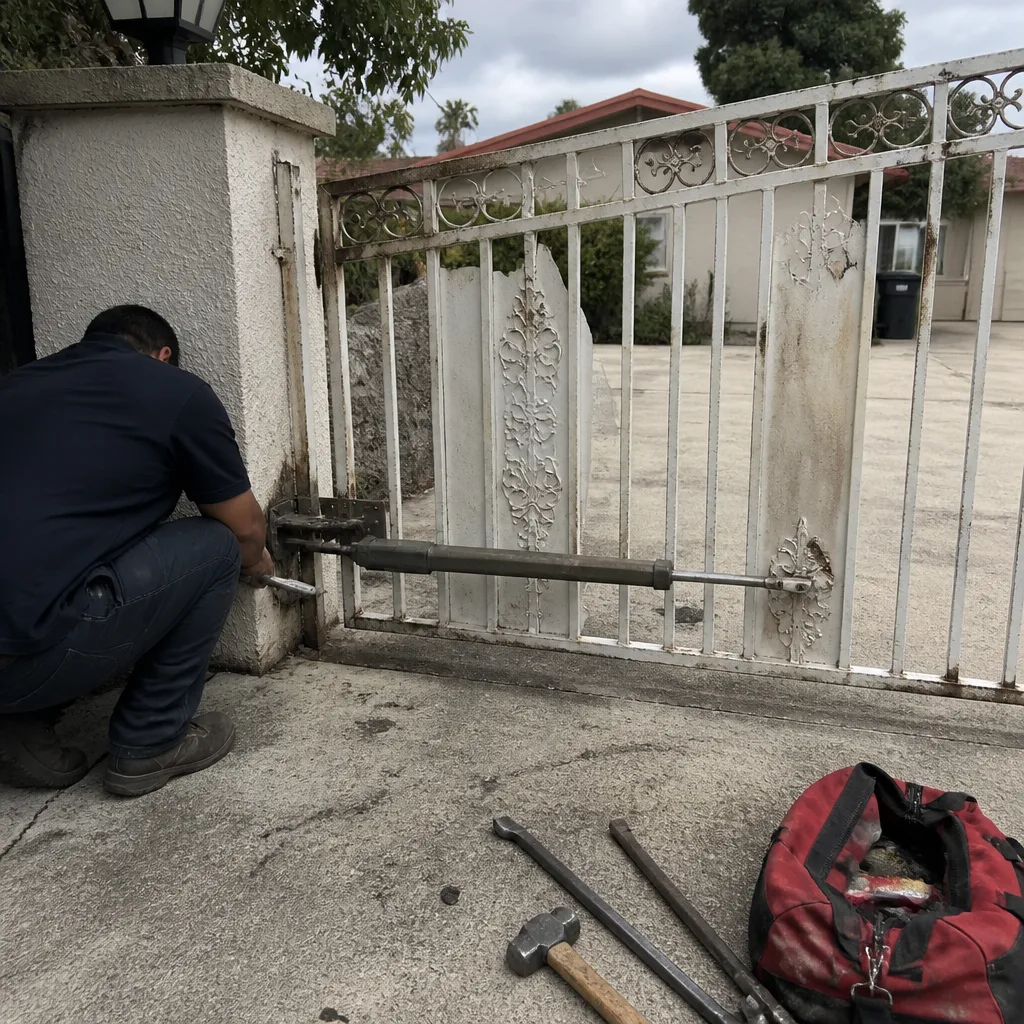 Before
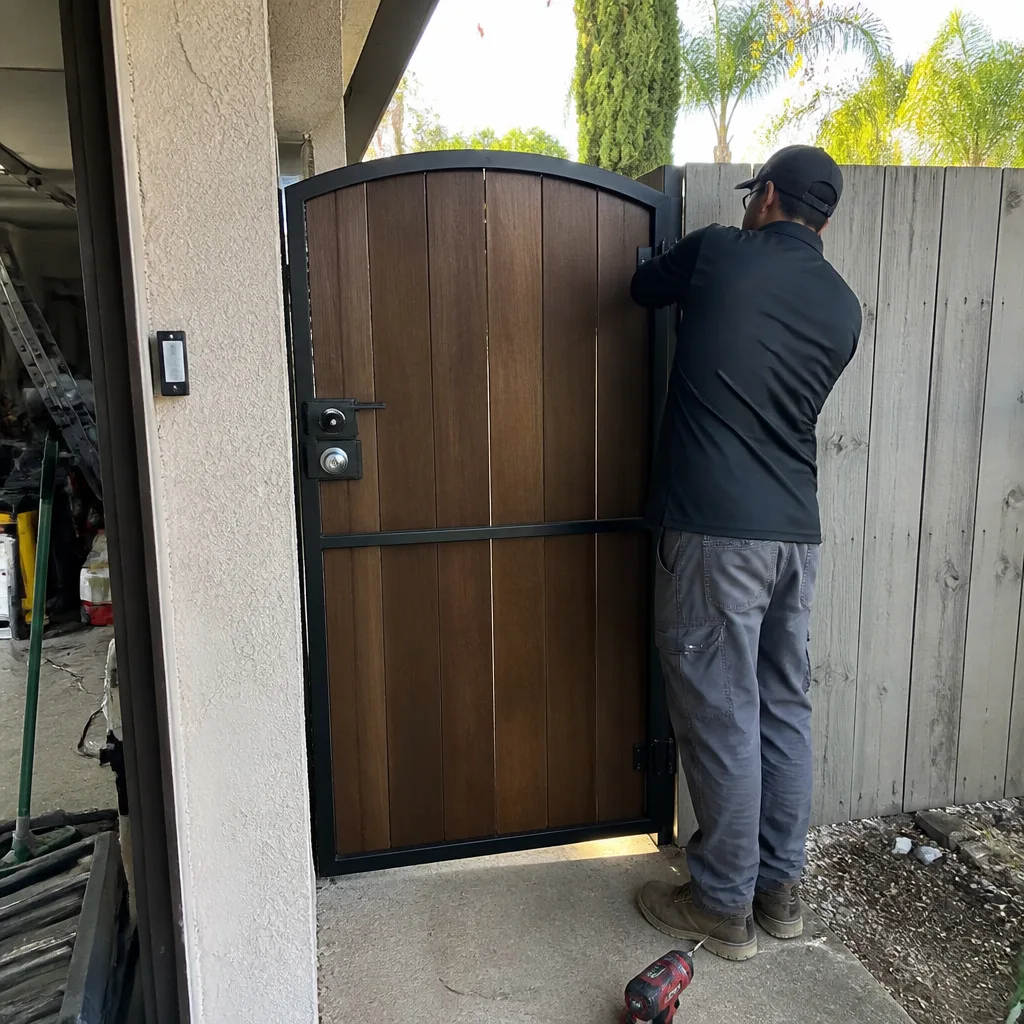 After
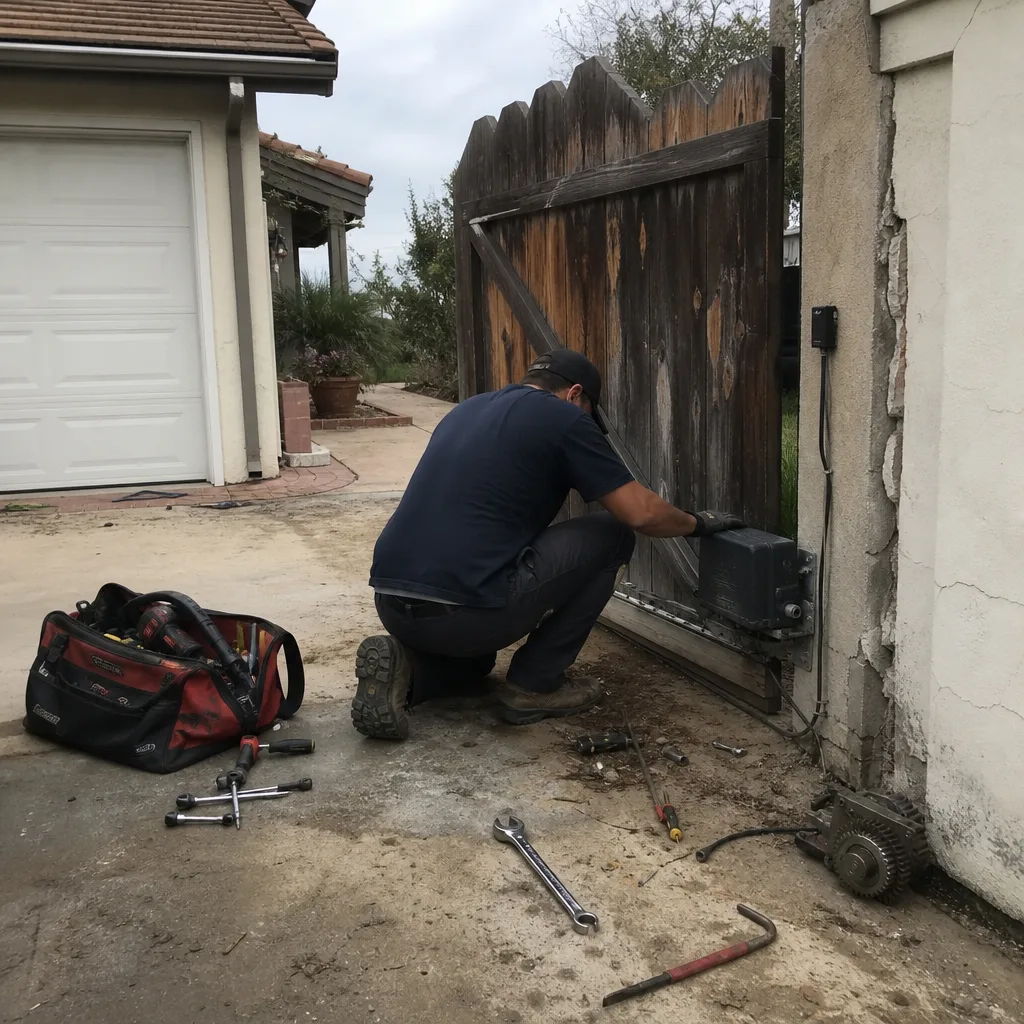 Before
 After
 Before
 After