
Last updated November 2, 2026
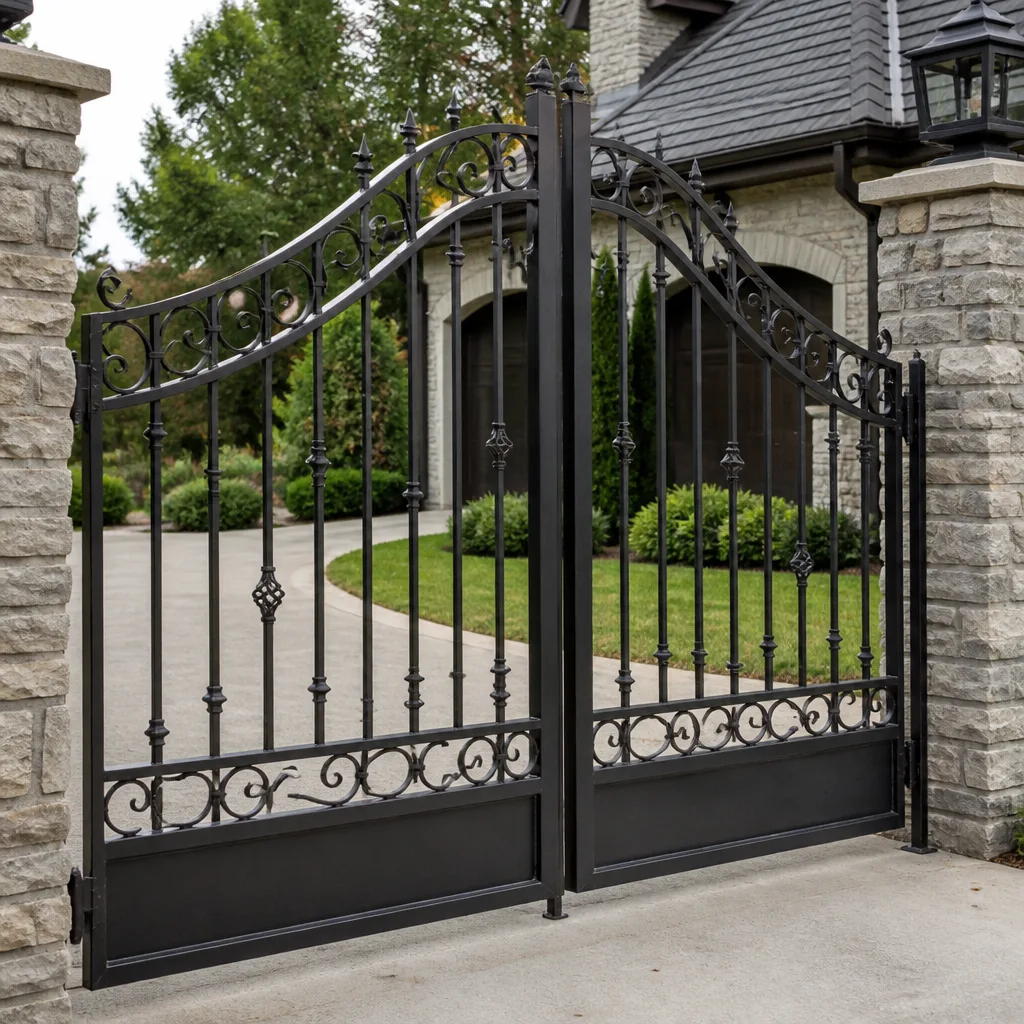 Wrought iron
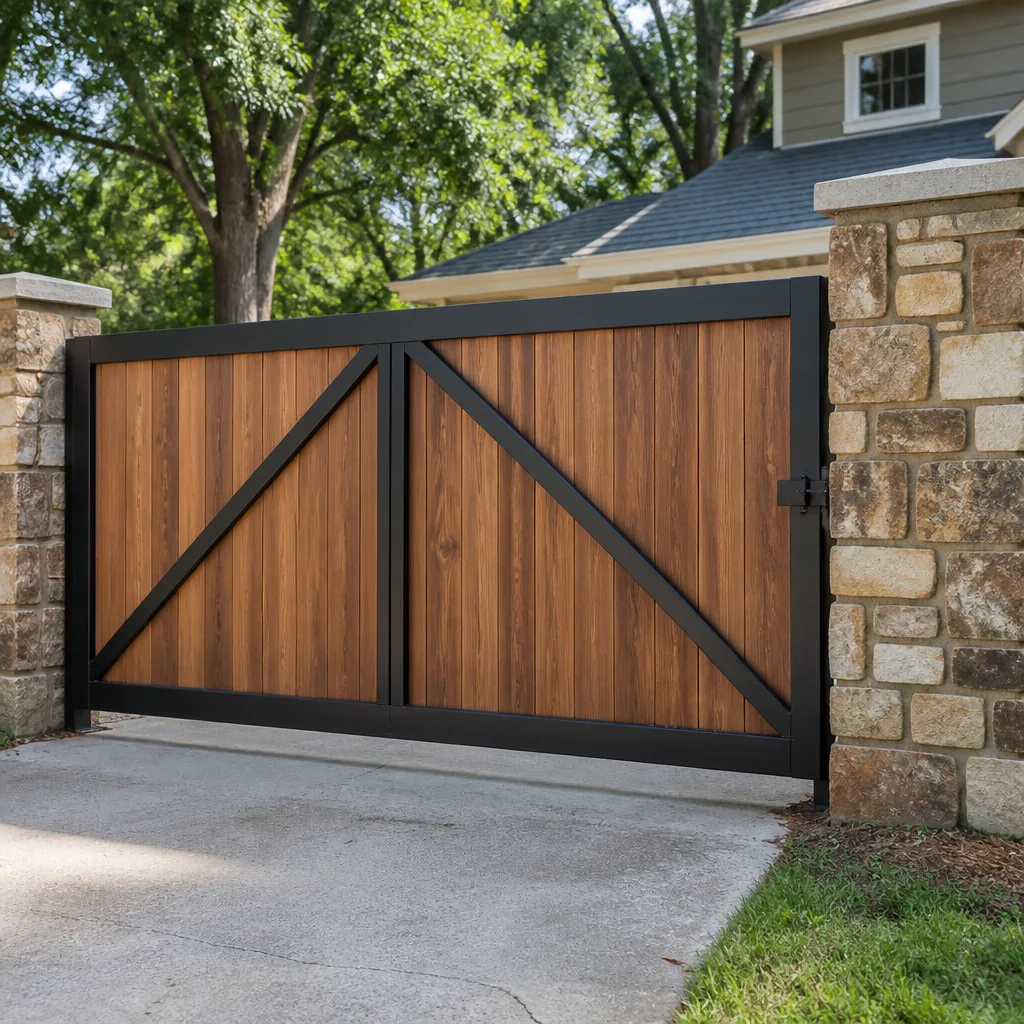 Wood & steel frame
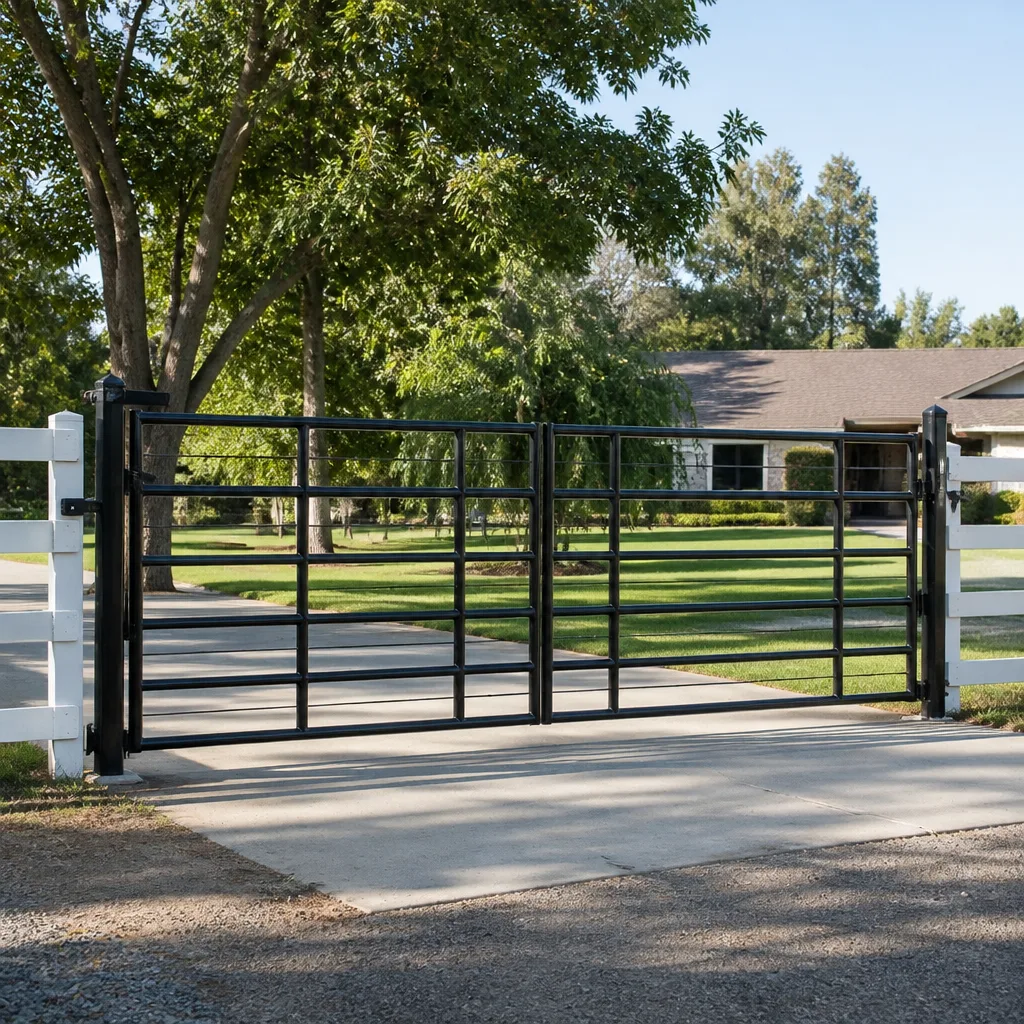 Farm & ranch
 Sliding driveway gates
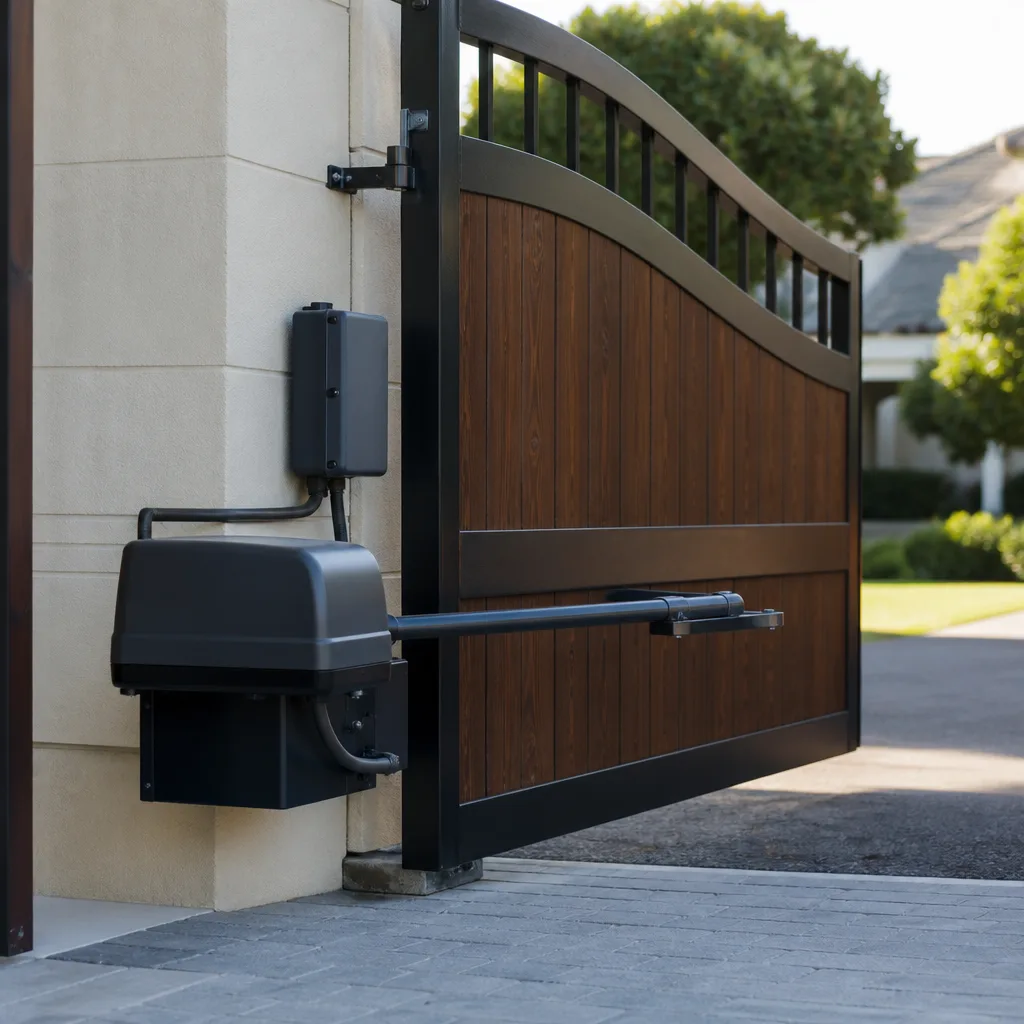 LiftMaster operators
Free on-site gate assessment - hinges, posts, and your LiftMaster or Nice gate operator checked before anything is quoted
The assessment is free and the quote is the invoice.
Get your free estimateThe Complete Gate Repair Guide for San Marcos Homeowners
San Marcos sits in a micro-climate corridor between coastal marine air and inland valley heat, a combination that accelerates gate hardware wear faster than either environment alone, yet almost no repair guides account for it. A gate that works flawlessly in Carlsbad can seize up, drift out of alignment, or throw phantom obstruction faults after two summers in San Marcos. This guide maps every major gate component to the local conditions most likely to destroy it: coastal humidity on control boards, sandy soil in loop detectors, and heat expansion on metal tracks. By the end, you’ll know which repairs are safe to attempt, which ones require a trained technician, and how to document your system before an emergency leaves you stranded.
Quick Answer
Gate repair in San Marcos most often traces back to three local culprits: humidity-driven corrosion on electrical components, sandy soil interfering with underground loop detectors, and temperature swings causing metal tracks and hinges to shift out of tolerance. Most mechanical repairs (hinges, wheels, track alignment) cost $150 to $450, while electrical repairs (control boards, motors, sensors) typically run $250 to $900 depending on the brand and part. For anything involving 24V or 120V wiring, safety sensors, or control board replacement, we recommend a trained gate specialist rather than a DIY attempt.
Styles & brands we work with
- Wrought iron
- Wood & steel frame
- Farm & ranch
- Sliding driveway gates
- LiftMaster operators
Table of Contents
- Understanding Your Gate System: Components and Failure Points
- How San Marcos Weather Attacks Gate Hardware
- The Five Most Common Gate Problems in San Marcos
- DIY-Safe Repairs vs. Professional-Only Work
- Component Lifespan Expectations for San Diego County Conditions
- Documenting Your Gate System Before You Need Emergency Service
- Brand-Specific Notes: LiftMaster, Mighty Mule, FAAC, and Elite
- Common Mistakes to Avoid
- When to Call a Professional
- Frequently Asked Questions
Understanding Your Gate System: Components and Failure Points
Every automated gate, whether it swings open like a door or slides along a track, shares a common architecture. Understanding these components helps you describe problems accurately on a service call, which means a better diagnostic outcome on the first visit. Here’s the full breakdown of what’s inside a typical San Marcos residential gate system.
- Gate operator (the motor unit): This is the box that does the physical work, either swinging the gate arm or driving the slide gate across its track. Operator failures account for roughly 40% of the service calls we see in San Marcos.
- Control board: The brain of the system. It interprets signals from remotes, keypads, loop detectors, and safety sensors. Coastal humidity is the silent killer here, causing corrosion on board connectors and cold solder joints over time.
- Loop detector and underground loop: A wire buried under the driveway detects the presence of a vehicle. When the loop fails or drifts, the gate can’t tell whether a car is waiting or has already cleared the opening.
- Safety sensors (photo eyes and edge sensors): These prevent the gate from closing on a vehicle, child, or pet. If they’re misaligned or dirty, the gate may refuse to close or may reverse mid-cycle.
- Hinges, rollers, and track: The mechanical wear points. Metal-on-metal contact plus heat expansion plus occasional sand grit makes these the most common mechanical failure points in San Marcos.
- Power supply and battery backup: Operators run on either 24V DC or 120V AC. Battery backups keep the gate working during power outages, but they degrade faster in heat, which matters in San Marcos summers.
What makes gate repair different from general home repair is that mechanical and electrical systems interact constantly. A misaligned track puts strain on the motor, which draws more current, which overheats the control board. A skilled technician diagnoses the entire chain, not just the part that finally broke. That’s where our single-trade focus matters: every technician at Gate Repair San Marcos works exclusively on gates, so we identify root causes rather than treating symptoms.
How San Marcos Weather Attacks Gate Hardware
San Marcos gets roughly 13 inches of rain per year and summer temperatures that regularly climb into the mid-80s to low-90s inland, while coastal marine air keeps the western edge cooler and damper. That temperature spread, often 15 to 20 degrees between morning and afternoon, is the hidden variable in most gate failures here. Metal expands when hot and contracts when cool, and over hundreds of cycles, that expansion-contraction stress loosens bolts, shifts welds, and pulls components out of alignment.
For slide gates specifically, the track tolerance is tighter than most homeowners realize. A properly installed slide gate track should allow roughly 1/8 to 3/16 inch of lateral play. When summer heat expansion pushes the metal past that tolerance, the gate starts scraping, grinding, or binding. The motor works harder, draws more amps, and eventually trips its thermal overload or burns out entirely. If you hear a scrape that wasn’t there in cooler weather, that’s heat expansion at work, and it’s a repair that’s far cheaper to address early than to wait until the motor fails.
Humidity is the second culprit. San Marcos sits close enough to the coast that morning marine layer reaches inland, especially in spring and early summer. For gate electronics, that moisture condenses on cool metal surfaces inside the operator housing. Over months and years, it corrodes control board traces, relay contacts, and sensor terminals. A board that looks fine from the outside may have microscopic corrosion on its underside, causing intermittent faults that only appear on humid mornings. This is a distinctly coastal-inland pattern that a technician who mostly works further inland won’t recognize as quickly.
And then there’s the soil. San Marcos has significant undeveloped acreage, and the sandy loam that characterizes much of the area migrates. Wind, construction, and simple erosion push fine sand into every gap. We’ll cover the loop detector problem in detail below, but the short version is this: sand is not electrically conductive, but it shifts the dielectric constant of the soil around your loop, which can cause false vehicle detection signals. When a San Marcos gate inexplicably opens for no one or refuses to close overnight, sandy soil drift around the loop is one of the first things a good technician checks.
The Five Most Common Gate Problems in San Marcos
If you live in San Marcos long enough with an automated gate, you’ll encounter at least three of these five problems. Here’s what they look like, what causes them, and how serious they are.
1. Gate Opens But Won’t Close (or Closes But Won’t Open)
This is the most frequent complaint we hear from San Marcos homeowners. It’s almost never a motor failure. More often, it’s a sensor issue. A misaligned photo eye, a dirty reflector, or a failing edge sensor sends a false “obstruction” signal to the control board, which overrides the close command as a safety precaution. Sometimes it’s a dying remote battery, but if the gate responds to the keypad and not the remote, the remote itself is usually the problem. When the gate refuses both commands, the control board is suspect. Whatever the cause, this is a diagnostic problem, not a brute-force replacement problem.
2. Gate Grinds, Scrapes, or Shudders While Moving
Mechanical resistance somewhere in the chain. On a slide gate, it’s typically worn rollers, a misaligned track, or debris packed into the track channel. On a swing gate, it’s usually worn hinge bearings or a bent gate arm. The danger here is secondary damage: the motor strains against the resistance, draws more current, and shortens its own life. If you hear a new grinding sound, stop using the gate and have it looked at. We’ve seen what starts as a $30 roller replacement turn into an $800 motor rebuild when left running for months.
3. Gate Reverses Mid-Cycle for No Apparent Reason
This is the classic loop detector problem, and it’s especially common in San Marcos because of sandy soil migration. An underground loop detects changes in inductance as metal passes over it. When sand drifts in around the buried wire or the soil density shifts, the loop’s baseline reading changes. The control board interprets that as a vehicle entering the detection zone and reverses the gate as a safety measure. The fix is usually a loop sensitivity adjustment or, in some cases, re-running the loop wire at a shallower depth with better compaction. This is not a DIY fix; loop tuning requires specialized equipment to read inductance values.
4. Gate Only Works Sometimes – Intermittent Operation
Intermittent failures are the hardest to diagnose and the most frustrating for homeowners. In San Marcos, humidity corrosion on board connectors is the leading cause. The board works until moisture bridges a micro-gap or until heat expansion separates a corroded joint. Intermittent faults are also caused by failing capacitors in the operator, loose wiring harness connections, or a weak battery in a solar-powered system. When a gate works flawlessly for three days and then fails once, the temptation is to ignore it. Don’t. Intermittent problems become permanent problems, and permanent problems cost more to fix.
5. Gate Is Stuck Open or Stuck Closed
A completely stuck gate is either a power delivery issue or a catastrophic mechanical failure. Check the breaker, check the battery backup, and check that the manual release lever hasn’t been disengaged. If power is present and the release is engaged but the gate won’t move, you’re dealing with a seized motor, a broken chain or belt, or a stripped drive gear. These are not field-spliceable repairs. A stuck-open gate is more than an inconvenience because it compromises the entire point of having a gate in the first place. This is a call-us-today situation.
DIY-Safe Repairs vs. Professional-Only Work
There’s a line between what a capable homeowner can safely service and what should never be touched without proper training. We’re not here to scare you away from basic maintenance. But we are here to keep you from voiding a UL-listed operator warranty or getting hurt. Here’s the breakdown.
DIY-safe repairs and maintenance:
- Cleaning and lubricating rollers, hinges, and tracks. Use a silicone-based lubricant. Avoid petroleum-based products, which attract dust and grit. Do this every 3 to 4 months.
- Cleaning photo eye lenses and edge sensor contacts. A soft dry cloth is all you need. If the lenses are yellowed or cracked, that’s a replacement, not a cleaning.
- Replacing remote batteries and reprogramming remotes. Most brands have simple learn-button programming. Your operator manual has the exact steps.
- Tightening visible bolts on hinges and gate arms. If a bolt is loose and you can see it, you can tighten it. Use a torque wrench if you have one, and don’t over-tighten.
- Clearing debris from the gate track. Sticks, leaves, and small rocks are safe to remove by hand. Wear gloves.
Professional-only work:
- Any 24V or 120V wiring repair. Even 24V systems can produce a surprising arc if a capacitor discharges. High-voltage wiring runs to outdoor locations, and San Marcos’s humidity makes insulation breakdown more likely.
- Control board replacement or repair. Boards are sensitive to static discharge, and incorrect installation can damage the new board instantly. Many operator warranties are voided by non-certified board replacement.
- Loop detector installation or tuning. This requires saw-cutting the driveway, running the correct gauge wire at the correct depth, and sealing it properly. Getting it wrong means the gate either doesn’t detect vehicles or detects phantom vehicles.
- Spring, torsion, or counterweight work on swing gates. A gate arm under tension can cause serious injury if released incorrectly. This is the same category of danger as garage door springs.
- Any repair that involves removing the gate from its hinges or track. A 400-pound gate can crush or pin a person. This work requires specialized jacks and lifting equipment.
Here’s the practical rule: if the repair involves electricity, tension, or lifting a gate off its mounts, call a professional. The cost of professional repair is always lower than the cost of a hospital visit or a voided warranty.
Component Lifespan Expectations for San Diego County Conditions
National average lifespan charts are misleading for coastal-inland zones like San Marcos. Heat accelerates capacitor aging, humidity accelerates corrosion, and sandy soil accelerates mechanical wear. Here’s what we actually see in the field, calibrated to San Diego County conditions.
- Gate operator motor: 8 to 12 years under normal use. In San Marcos, expect 8 to 10 years if the gate is in full afternoon sun. Motors in shaded areas last closer to 12.
- Control board: 7 to 10 years. Humidity corrosion is the limiting factor. Boards in properly sealed housings last longer than boards in cabinets with visible gaps.
- Loop detector: 5 to 8 years. The detector box itself is solid-state and rarely fails on its own. The underground loop wire is the weak point, and sandy soil accelerates sheath breakdown.
- Photo eyes and edge sensors: 4 to 7 years. UV exposure yellows the lenses, and heat stress cracks the housings. San Marcos sun exposure matters more than age.
- Hinges on swing gates: 5 to 8 years for standard steel hinges, 10 to 15 for sealed bearing hinges. Coastal air accelerates surface rust, but the bigger problem is the constant thermal cycling.
- Slide gate rollers and track: 3 to 7 years for rollers, 15 to 20 for the track itself. Rollers are wear items. Sand and grit from San Marcos’s undeveloped lots gets into the bearing races and grinds them down faster than normal.
- Battery backup: 2 to 4 years. Heat is the enemy. If your operator housing sits in direct afternoon sun, expect the shorter end of that range.
These numbers assume the gate was properly installed to begin with. A gate that was installed out of level will wear every component faster. A gate that doesn’t have adequate clearance for heat expansion will kill rollers and motors on an accelerated schedule. If your gate is eating rollers or blowing motors more often than the numbers above, the problem is probably the installation, not the parts.
Documenting Your Gate System Before You Need Emergency Service
Most San Marcos homeowners call us for the first time when their gate is stuck and they’re late for work. That’s the worst possible time to start looking for model numbers and board revisions. Here’s the documentation prep we recommend doing right now, while the gate still works. It takes 20 minutes and saves you from a slower diagnosis later.
- Find the operator model number. It’s on a label on the operator housing or under the cover. Write down the manufacturer (LiftMaster, FAAC, BFT, Linear, Viking, Ghost Controls, DoorKing, Elite, Mighty Mule) and the exact model number.
- Locate the control board and note its revision. The board revision is printed on the board itself, often something like “Rev C” or “V2.1.” Different revisions of the same model have different troubleshooting procedures and different compatible parts.
- Photograph the entire setup. Take clear photos of the operator, the control board, the hinges, the track, the loop detector, and the safety sensors. Store them somewhere you can find them: a folder on your phone, a cloud drive, anywhere.
- Note your power supply type. Is the operator plugged into a standard outlet? Wired to a dedicated circuit? Does it have a battery backup? Is there a solar panel? Write all of it down.
- Record the gate’s normal behavior. How long does it take to open fully? What sound does it make? Does it pause at any point? Knowing the baseline makes abnormal behavior obvious when it starts.
- Log your last maintenance date. If you lubricate the rollers or tighten bolts, write it down. A maintenance log helps a technician distinguish between gradual wear and sudden failure.
When you call a gate repair company in San Marcos with the model number and board revision already in hand, the technician can arrive with the right parts on the first trip. That’s the difference between a same-day fix and a multi-visit repair. This prep step is the one most homeowners skip, and it’s the one that most directly affects your repair timeline and final bill.
Brand-Specific Notes: LiftMaster, Mighty Mule, FAAC, and Elite
We service all major gate brands, including LiftMaster, FAAC, BFT, Linear, Viking, Ghost Controls, DoorKing, Elite, and Mighty Mule. But four brands dominate residential installations in San Marcos, and each has its own personality when it comes to failure modes.
LiftMaster: The most common residential operator in San Diego County. These are solid, well-supported machines, but they’re sensitive to voltage fluctuations. If your San Marcos neighborhood has older wiring or frequent brownouts, a LiftMaster operator may throw control board errors that look like motor failures. The boards are replaceable and the motors are rebuildable, so don’t let anyone sell you a full replacement without a proper diagnosis.
Mighty Mule: Popular for DIY installations and budget-friendly automated gates. The weakness is the battery system. Mighty Mule operators rely on battery power with a solar charging option, and San Marcos heat shortens battery life significantly. If a Mighty Mule gate works in the morning but fails by late afternoon, the battery is almost always the problem.
FAAC: Italian engineering with a strong presence in higher-end residential and commercial installations. FAAC systems are hydraulically driven in many models, which means they handle heat expansion better than purely electric operators. The trade-off is that hydraulic fluid needs periodic checking, and seals degrade in sustained heat. A FAAC gate that moves slowly on hot afternoons may be low on hydraulic fluid.
Elite: A favorite for light commercial and multi-family access control in San Marcos. Elite operators are workhorses, but their wiring connections are more complex than residential units, and corrosion on terminal blocks is a common failure mode. If moisture gets into an Elite operator housing, the terminal block is usually the first component to show problems.
We’re factory-familiar with all nine brands we service, which means we know the specific wiring schematics, board revision histories, and common failure modes for each. That diagnostic speed is the difference between a 30-minute service call and a multi-hour trial-and-error session. Our Gate Repair in San Marcos service covers every brand on this list, and our technicians arrive prepared for the specific system you have.
Common Mistakes to Avoid
- Ignoring new sounds for more than a week. A new scrape, grind, or whine is an early warning. The longer it runs, the more secondary damage accrues, and the repair bill multiplies.
- Using petroleum-based lubricants on hinges and rollers. WD-40 and similar products break down quickly and attract sand. In San Marcos, where fine sandy dust is always in the air, this creates a grinding paste that accelerates wear. Use silicone spray instead.
- Forcing a gate that’s struggling. Pushing or manually overriding a gate that won’t move puts strain on the motor, chain, and board. If the gate won’t move under its own power, something is wrong. Forcing it makes the problem worse.
- Replacing the remote before checking the operator. If a gate stops responding to all remotes simultaneously, the problem is rarely the remotes themselves. The operator’s receiver board or antenna is the more likely culprit.
- Attempting to adjust loop detector sensitivity without the right tools. Loop tuning requires a specialized inductance meter. Guessing at sensitivity settings usually makes phantom detections worse, not better.
- Waiting until the gate completely fails to document the system. Your operator model number, board revision, and maintenance history are much harder to find when the gate is stuck and you’re frustrated. Document everything now.
- Installing a replacement operator without checking track or hinge alignment first. The new motor will fail the same way the old one did if the underlying mechanical problem isn’t addressed. This is how homeowners end up replacing operators every three years.
When to Call a Professional
Some gate problems announce themselves as emergencies: a stuck-open gate, a smoking operator, a gate that slams shut without slowing. Other problems creep in quietly: a slight hesitation, a faint grinding sound, a remote that works only sometimes. Both deserve professional attention, but the quiet ones are the ones most often ignored until they become expensive.
Call a professional when the problem involves any electrical component, any safety sensor, any spring or tension mechanism, or any repair that requires lifting the gate off its mounts. Call a professional when you’ve already tried the DIY-safe fixes and the problem persists. And call a professional when you’re not sure what’s wrong; a good gate technician can diagnose a system in under an hour, and the diagnostic fee is almost always less than the cost of guessing wrong. Gate Repair San Marcos offers free estimates in San Marcos; call (877) 798-8589 to schedule one.
Frequently Asked Questions
Mechanical repairs like hinge replacement, roller replacement, or track realignment typically run $150 to $450. Electrical repairs like control board replacement or motor rebuilds typically run $250 to $900 depending on the brand and part. The exact price depends on your specific system, which is why we always quote the price before any work starts. Call (877) 798-8589 for a free estimate on your specific gate.
For emergency situations like a gate stuck open, we prioritize fast response. For non-emergency repairs, scheduling is typically within a few business days. Our Electric Gate Repair in San Marcos team is equipped to handle most repairs in a single visit when we have your model information upfront.
We service all major gate brands, including LiftMaster, FAAC, BFT, Linear, Viking, Ghost Controls, DoorKing, Elite, and Mighty Mule. We’re factory-familiar with each brand’s wiring schematics, board revisions, and common failure modes, so we diagnose accurately and repair correctly the first time. Whether you have a budget Mighty Mule or a commercial-grade Elite system, we can service it.
Basic maintenance like lubrication, remote battery replacement, and photo eye cleaning are DIY-safe. But anything involving wiring, safety sensors, control boards, springs, or lifting the gate off its mounts should be handled by a trained professional. Attempting these repairs yourself can void your operator warranty and create serious safety risks.
Phantom openings are usually caused by loop detector drift, often from sandy soil migration around the underground loop wire, or by a failing remote receiver board. Both issues require diagnostic equipment to confirm. This is one of the most common San Marcos-specific gate problems we see, and it’s almost never a “haunted gate”; it’s physics and soil conditions.
Yes. We offer full Gate Installation in San Marcos, from manual gates to fully automated swing and slide systems. If your existing gate is beyond economical repair, we can assess your current setup and recommend replacement options. Or explore our Gate Repair in San Marcos services first; sometimes a strategic repair extends a gate’s life by years.
The Bottom Line
San Marcos gate failures follow predictable patterns. Heat expansion stresses mechanical components, humidity corrodes electrical components, and sandy soil disrupts loop detectors. Once you know which force is acting on your system, the fix becomes obvious to a trained technician. Document your gate’s model and board revision now, keep up with basic lubrication, and respond early when something changes. If you’re facing a gate problem in San Marcos, we specialize exclusively in gates; it’s all we do. Call (877) 798-8589 for a free estimate, or start with our Gate Repair San Marcos home page to see the full range of services. We diagnose the real cause, quote the price upfront, and get your gate working correctly the first time.
Written by the team at Gate Repair San Marcos, serving San Marcos since 2011.
See the difference
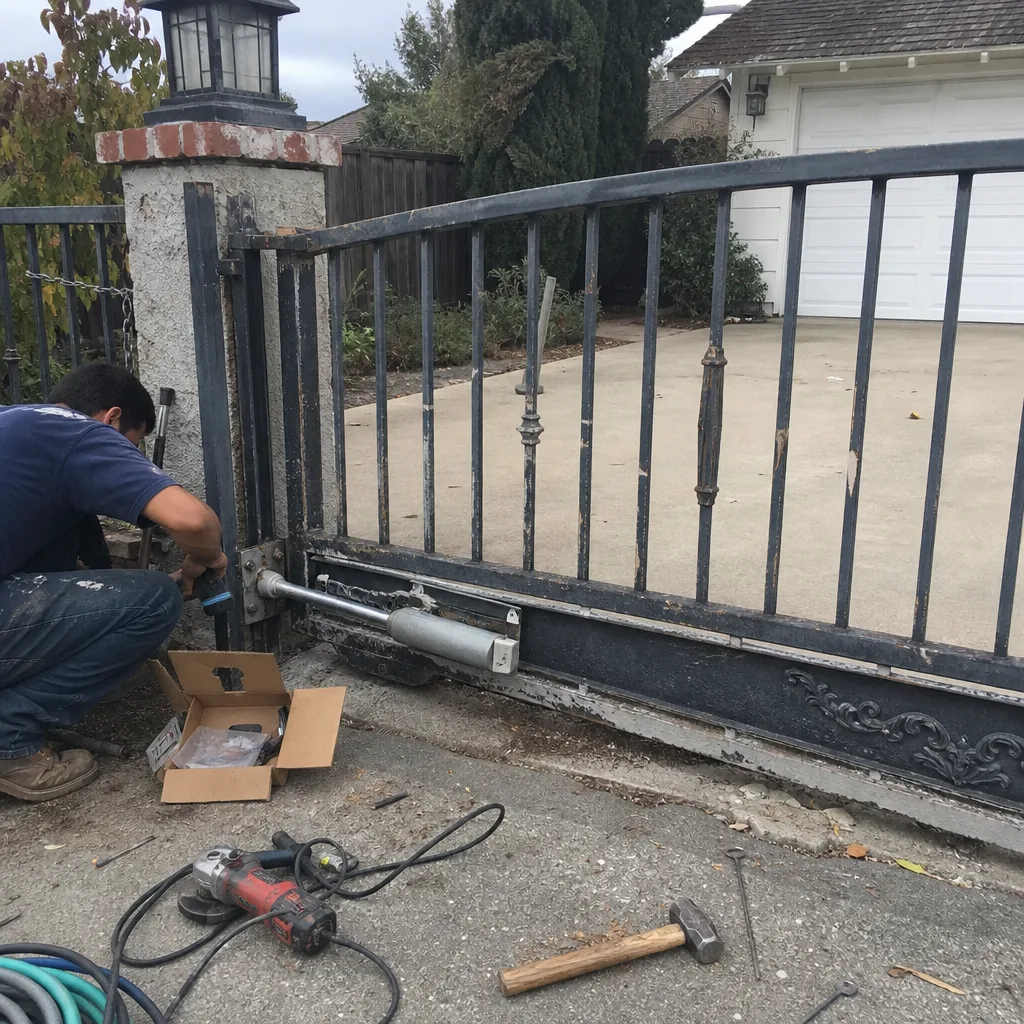
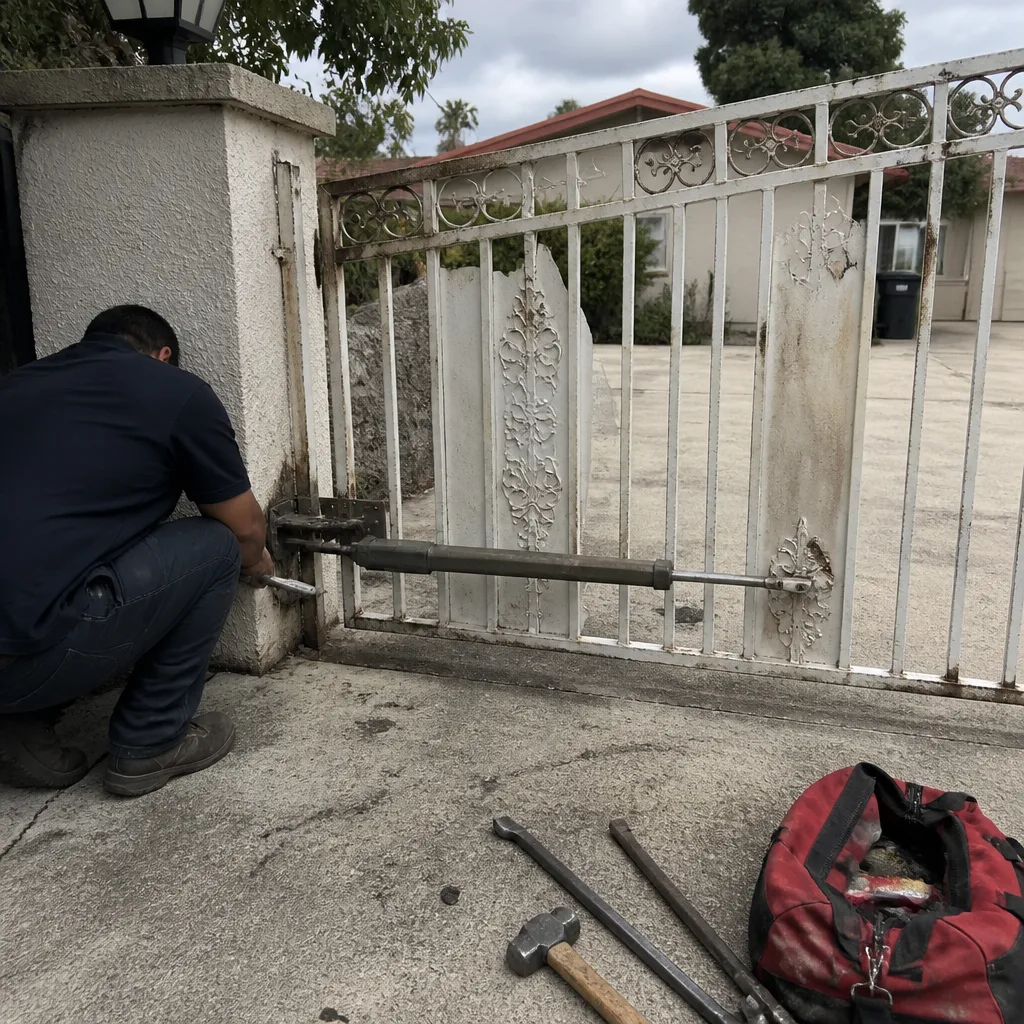 Before
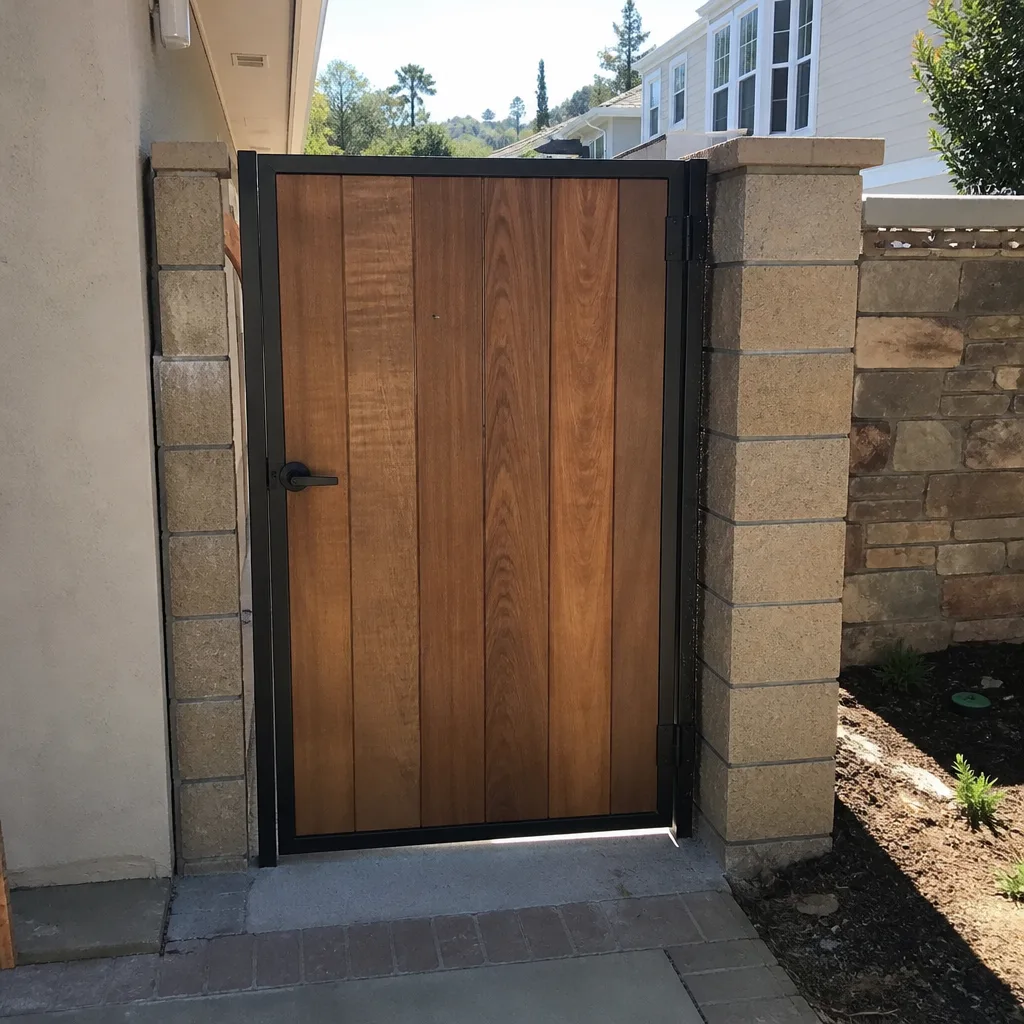
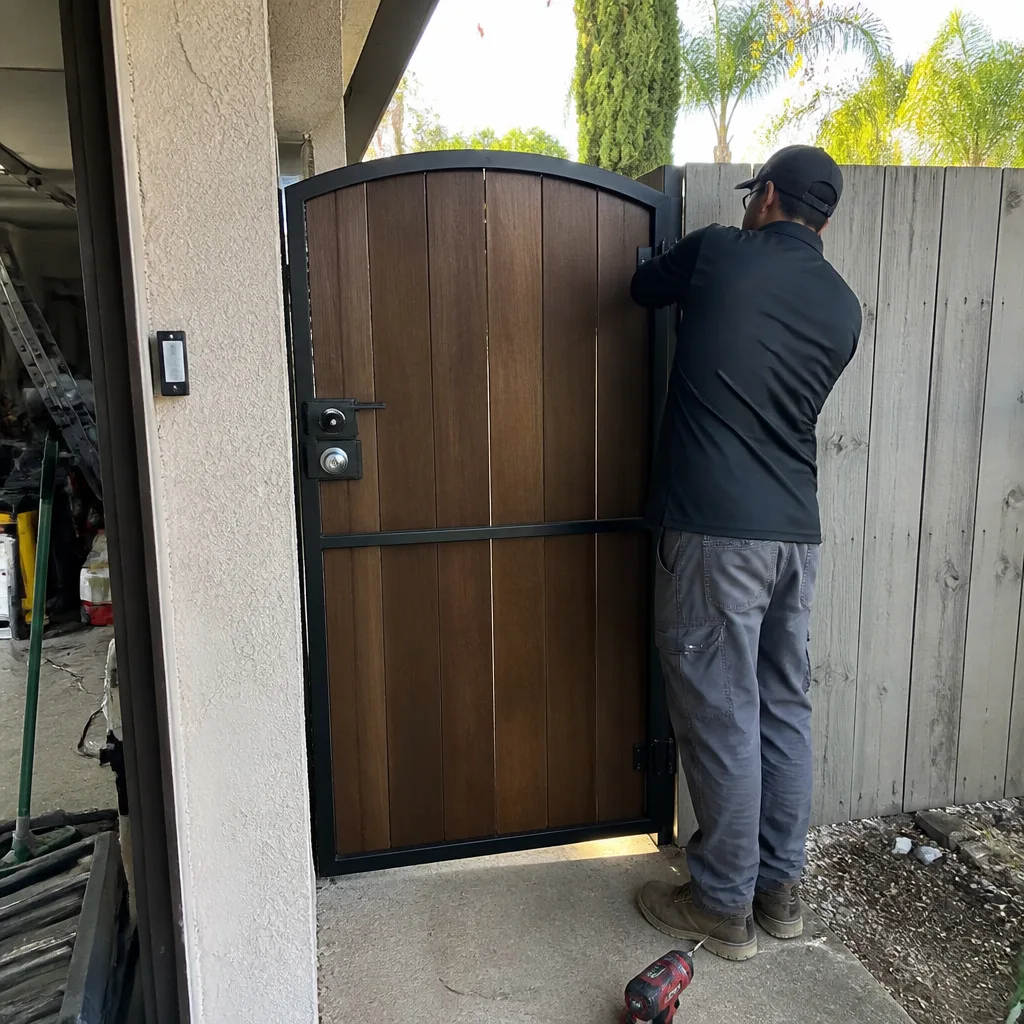 After
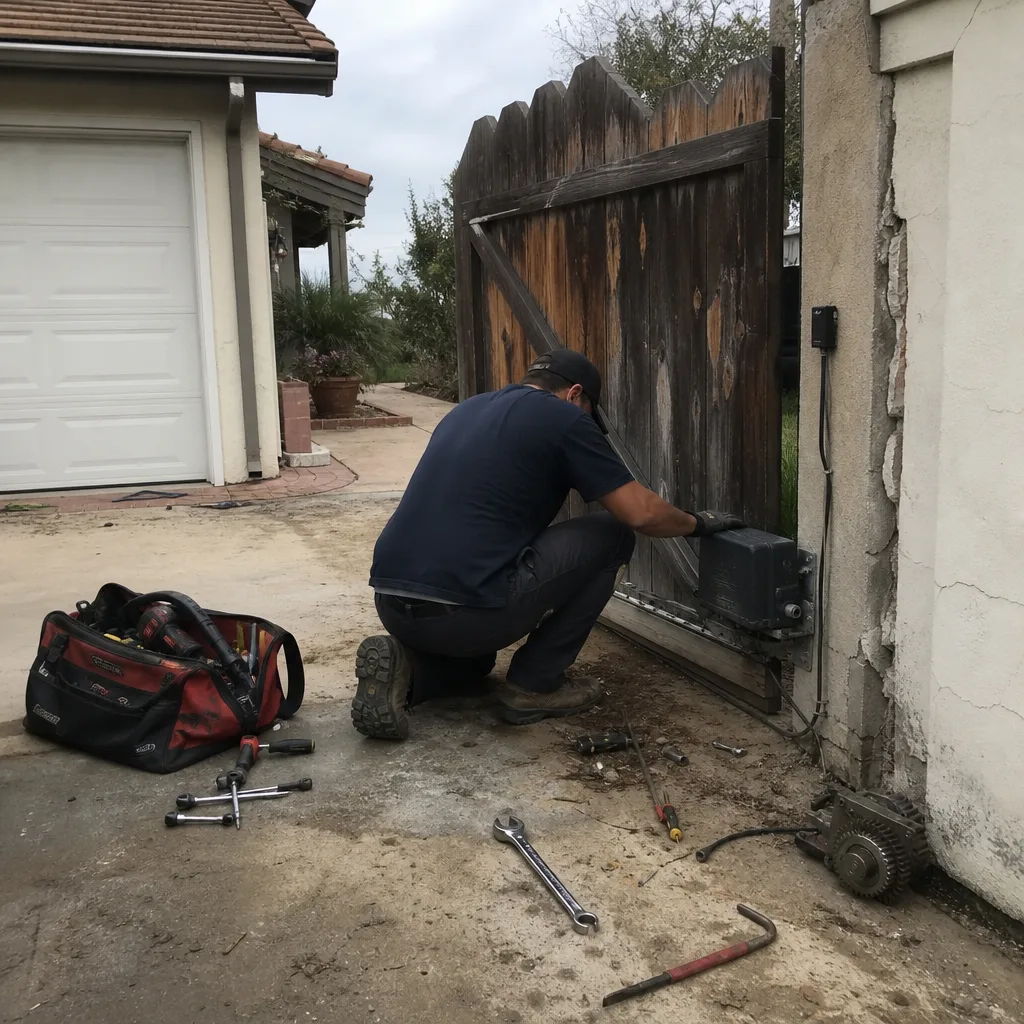 Before
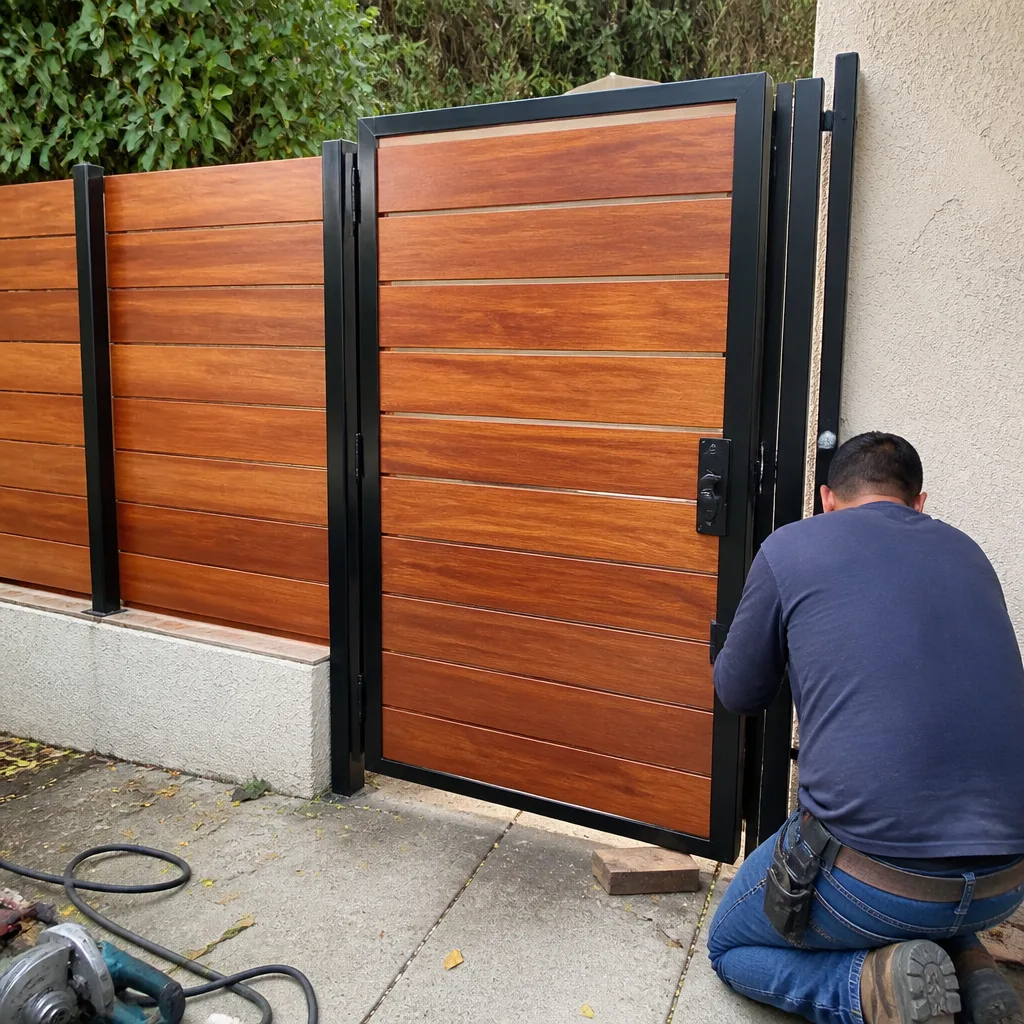 After
 Before
 After